martes, 14 de junio de 2011

“TE QUIERO” - BANG BANG

A few months ago opened in Sofia the Spanish cuisine restaurant "Te quiero" in the neighborhood of Krasno Selo. It is always good news to see that the brand "Spain" has its effect, but even better news is to realize that behind the brand is really a company that offers authentic Spanish food quality and no substitutes.


So, "Te quiero " is strongly recommended and one of the best restaurants in Sofia without any doubt. However there are some of my friends that they do not like to go.

The reason is that being a site that has become very fashionable lately, there are people with a lot of money. To express myself better, in Bulgaria people with a lot of money have bodyguards and of course they also come to the restaurant.

You find out five or six black-clad giants guarding the entrance and the cool cars. Right inside, we find three other tables reserved for fellow bodyguards of the outside ones (they keep on taking turns). When I was there, they were about ten, apart from those in the door.

We were having dinner at the side of those tables and I understood exactly what my friends had said about being in tension in a place where you are supposed to go to enjoy a relaxed meal. For one moment I felt like in the movie "The Godfather" in the scenes where if it triggers a "shootout", the clueless customer has all the tickets to receive the bullets. Still with the mafia environment I did enjoy the dinner.

So now I'll make one true and unreserved recommendation. Catch pens and write carefully (especially Marco, you stop a lot in Belgrade)
"El Escondite de Ramiro" n.4 Vojvoda Dobrnja Street 11000 Belgrade. Tel 2759092/0616648718

In the three years I've been living in the Balkans, the meats and fish prepared by Emiliano in his cozy restaurant is undoubtedly the best food I've tasted.

I wish him to have a lot of success and I hope bodyguards don´t fill up the place.

lunes, 16 de mayo de 2011

OTRO QUE MUERDE EL POLVO

Veamos un resumen de las condiciones del rescate de 78.000 millones de euros impuestas a Portugal por el FMI, la Comisión Europea y el BCE:


A.GASTO
1.-Reducción de 1.000 Millones de Euros anuales para las administraciones.
a) Eliminación de servicios superfluos (reducción total del 15% de los costes operativos)
b) Limitación de nuevas contrataciones.
c) Reducción del personal (con una disminución del 15% de los puestos directivos)
d) Congelamiento de los salarios.
d) Disminución de las prestaciones médicas a los funcionarios.
2.-Reducción de 370 Millones anuales en educación.
a) Reducción del personal.
b) Reducción de subsidios a escuelas privadas.
3.-Reducción de 925 millones en el sistema público de salud.
a) Reducción de las ayudas a los medicamentos.
b) Aumento del sistema copago.
4.-Rebaja progresiva de las pensiones (ahorro 445 millones)
5.-Recorte del seguro de desempleo en tiempo y dinero (150 millones)y abaratamiento del despido
6.-Reducción del coste de las empresas públicas (515 millones) Se acelera la privatización de las compañías eléctrica EDP, aérea TAP, Redes Energéticas Nacionales, Aeropuertos de Portugal, GALP, Correos y división de seguros de Caixa Geral de Depósitos.
7.-Reducción de las transferencias a administraciones locales y regionales (175 millones)

B. INGRESO
1.-Reducción de las exenciones fiscales a personas físicas (150 millones) y empresas (150 millones)
2.-Eliminación de deducciones por vivienda (250 millones de euros)
3.-Aumento del IVA a base de reducir exenciones (410 millones)
4.-Modificar gravámenes de bienes y servicios.
5.-Subida de impuestos al consumo en vehículos, tabaco y electricidad.

La economía de España es 6,4 veces la de Portugal (1.035.656 Millones de Euros de Producto interior bruto contra 161.472 millones) y su población 4,3 veces mayor (46,1 millones contra 10,6). Independientemente del nivel de endeudamiento público de España, nos podemos hacer una idea de la magnitud e impacto de un hipotético rescate.

La reflexión final es la siguiente:
En Grecia, con una economía y población un poco superiores a la de Portugal, el rescate no ha funcionado. Las medidas para Portugal fueron acordadas antes del impago de Grecia de la semana pasada.

Conclusión: Si España cae, las medidas (que ya no las pondremos nosotros sino que nos vendrán impuestas desde fuera) serán más duras todavía.

ANOTHER ONE BITES THE DUST

Here is a summary of the conditions for the 78,000 million euros rescue for Portugal imposed by the IMF, the European Commission and the ECB:


A. EXPENDITURE
1.-Reduction of 1,000 million euros per year for government.
a) Elimination of superfluous services (15% total reduction in operating costs)
b) Limitation on new hires.
c) Reduction of staff (with a 15% decrease of managers)
d) Freezing of wages.
d) Reduction of medical benefits to public workers.
2.-Reduction of 370 Million per year in education.
a) Reduction of staff.
b) Reduction of subsidies to private schools.
3.-Reduction of 925 million in the public health system.
a) Reduction of aid to pharmacy expenses.
b) Increasing of the co-payment system.
4.-Progressive reduction of pensions (445 million savings)
5.-Cut of unemployment insurance in time and money (150 million) and lowering of dismissal cost for the companies.
6.-Reduced cost of public companies (515 million) and accelerating the privatization of electric companies REN, EDP, TAP Air, National Energy Networks, Airports of Portugal, GALP, National Post and insurance division of Caixa Geral de Depósitos.
7.-Reduction transfers to local and regional governments (175 million)

B. INCOME
1.-Reduction of tax exemptions to individuals (150 million) and companies (150 million)
2.-Elimination of deductions for housing (250 million euros)
3.-Increase in VAT through reduce of exemptions base (410 million)
4.-Change taxes for goods and services.
5.-Rise in consumption tax on vehicles, tobacco and electricity.

Spain's economy is 6.4 times that of Portugal (1.035.656 million euros of gross domestic product against 161.472 million) and 4.3 times greater population (46.1 million versus 10.6). Whatever the level of government debt in Spain, we can get an idea of the magnitude and impact of a hypothetical bailout rescue.

Think about this:
In Greece, whose economy and population slightly higher than Portugal, the bailout has not worked. The measures for Portugal were agreed before debt payment default in Greece last week.

Conclusion: If Spain goes down, the measures (which we will not decide but will be imposed from outside) will be much harder.

jueves, 24 de marzo de 2011

¿POR QUÉ IR AL CINE SI TENEMOS LA CNN?

En una época de sostenido crecimiento del IPC si hay unos productos que ha sufrido un notable bajón de precio, esos han sido los CD´s y DVD´s de música y cine. Lo que antes se vendía a 20 Euros, ahora se vende a 2. Si este es su precio actual de oferta, esto quiere decir que los comerciantes están dispuestos a vender a ese precio para obtener un beneficio. Por consiguiente el beneficio que recibían anteriormente (por el mismo coste) era muchísimo mayor.
Una pregunta para reflexionar sería cuántos otros productos tienen un precio “irreal” o artificialmente inflado.

Aunque sea ilegalmente, tener el arte al alcance de la mano con una sola descarga, significa la reducción del comercio de dicho arte. De esto podemos extraer dos conclusiones positivas:
La primera es muy evidente, es más económico para el público aunque esto suponga la reducción de los beneficios a los productores y artistas que ahora buscan otras formas alternativas del negocio (incremento de los beneficios en publicidad, conciertos en directo, etc..)
La segunda es que el arte se ve forzado a superarse a sí mismo. Para que el cliente page por un CD de música o una entrada de cine, se tiene que ofrecer más que antes (álbumes impecables sin canciones de relleno, películas en 3D muy bien hechas…) En definitiva, los productores no pueden permitirse malos productos que no satisfagan al público.

Al final música y cine, por limitar los ejemplos, son una forma de buscar placer y evadirse de la realidad.
También son una de proyectar éxito, deseos de una vida mejor y consumo.

La crisis económica y también la disminución de la preponderancia de este “comercio de ilusión” nos lleva de cabeza a la realidad. Y allí tenemos a Egipto, Bahrein, Yemen, Siria, Costa de Marfil, Libia y, cómo no, Japón.


Creo que en la mente de todos resuena una frase muy clara: “La realidad siempre supera a la ficción”
Esta preocupación por lo que pasa en la realidad, por lo que pasa en el mundo, es lo que nos tiene que mover a actuar (como se actuó en Egipto) para mejorar la situación actual. Nunca debemos conformarnos. Hay pocos y muy poderosos a los que los interesa que el mundo siga igual y que sigamos quietos, tranquilos y cegados por las luces de artificio.

Reflexión extra 1: ¿Y si lo que sucede en Libia pasa… … en China?

Reflexión extra 2: Los aviones de la coalición que bombardean posiciones pro-Gadafi salen de bases italianas y se alimentan con combustible vendido a Italia por Gadafi!!!

WHY TO GO TO THE MOVIES IF WE HAVE CNN?

Living in an era of sustained growth in the Consumer Price Index, if there is a product that has undergone a significant downturn in prices, those were the CDs and DVDs of music and film. What once was sold for 20 euros, now sells for 2. If this is the current price range, this means that traders are willing to sell at that lower price for a profit. Therefore, the benefit they received earlier (at the same cost price) was much higher.
This is a question to ask ourselves how many other products are priced "unreal" or artificially inflated.

Even illegally, to have art just for a single download, means reductions of trade. From this we can draw two positive conclusions:
The first is very obvious, it's cheaper for the public. This represents a reduction of benefits to producers and artists who are now seeking alternative forms of business (increase profits on advertising, live concerts, etc. ..)
The second is that art is forced to improve. For the client to spend money for a music CD or a movie ticket, you have to offer more than before (very good albums with no “trash filling songs”, movies in 3D very well done ...) Producers can not afford bad products and not satisfy the public.

At the end music and film, to limit the examples, are a way of seeking pleasure and escape from reality.
They project on us and idea of success, desire for a better life and consumption.

The economic crisis and the decline in the prevalence of this "illusion trade" leads us dive into reality. And there, we have Egypt, Bahrain, Yemen, Syria, Ivory Coast, Libya and, of course, Japan.


I think in the minds of all echoes a very clear statement: "Reality always overpasses fiction"
This concern for what happens in reality, what happens in the world, is what we need to move ourselves to enforce changes (as in Egypt) to improve the current situation. We should never settle in an comfortable but wrong position. The interest of a few very powerful people is that the world remains the same and the rest of the population stay still, quiet and blinded by the artificial lights.

Extra Thought 1: What if what happens in Libya happens ... ... in China?

Extra Thought 2: The coalition aircrafts that bombs pro-Gaddafi facilities take off from Italian bases and are fed fuel sold to Italy by Gaddafi!!!!

martes, 25 de enero de 2011

LA VISITA CHINA Y SUN WU "EL MAESTRO"

El "Sunzi" o tratado del Maestro Sun data aproximadamente del último cuarto del siglo IV a.c.
En trece capítulos, y envueltas en una aureola exótica, se recogen sus enseñanzas sobre “El Arte de la Guerra” que es como popularmente se conoce en nuestros días a este texto.

La datación de este escueto tratado se enmarca en el periodo en que “Los Reinos Combatientes” (480-221 a.c.) que es la época cuando la las confrontaciones entre las naciones chinas dejan de caracterizarse por ser un “torneo de valores” entre la exclusiva clase guerrera o “los caballeros” de cada uno de los bandos contendientes, para pasar a ser una cuestión que abarca al estado entero, al cual se organiza a semejanza de un ejército guardando la correspondencia de los niveles sociales.

Comprender la cultura de China, según los entendidos, en un proceso en el que se necesita conocer la evolución de la historia desde una perspectiva enorme en la escala temporal. Todo cambio requiere de varias generaciones para compensar la inmensa inercia de la masa poblacional. Sin embargo, estos períodos quedan arraigados profundamente en la cultura, artes, escritura y mentalidad del gigante asiático.


Leer “El Arte de la Guerra” en este mismo instante (con la simbólica visita del Presidente Chino a EEUU como telón de fondo) produce cuando menos desasosiego. Procederé a enumerar las razones.

1.-Uno de los pilares fundamentales del libro es el principio por el cual se debe evitar la confrontación con la intención de ganarla sin tener que disputarla. Así pues China no se confronta con nadie económicamente, únicamente avanza inexorablemente y “envuelve”.

2.-En “terreno de convergencia” (perteneciente a varias naciones) se sirve de alianzas para imponerse a un adversario. En este blog creo he mencionado por ejemplo la financiación y construcción china para el puente a través del Danubio en Belgrado. Así pues observamos una creciente actividad diplomática del país oriental busca puntos estratégicos, en este caso de Serbia, como futuro país de la Unión Europea y con gran potencial de crecimiento y consumo.

3.-También se menciona el concepto de valerse del enemigo, es decir, “que el enemigo trabaje para ti”. Al comprar deuda de España o cualquier otro país, es al final lo que está haciendo. Siempre que otro país trabaje para ti y te haga ganar dinero, no trabajará para sí mismo. En definitiva, progresarás a costa de él. Ahora todos los mercados están muy felices por la recolocación de la deuda pero, se ha parado alguien a pensar en lo que pasará cuando ese bucle de recompra y refinanciación de deuda estatal se acabe y las naciones inversoras quieran cobrar “en efectivo”. La buena noticia no debería ser conseguir colocar la deuda, sino que no haya deuda que vender y se esté amortizando la anterior.

4.-Otra de las ideas básicas del tratado es el mantenimiento estricto de la disciplina. Esté mecanismo debe estar tan perfeccionado de modo que las órdenes se transmitan desde la cabeza del general (a quien no corresponde la tarea de empuñar la espada) hasta el último de sus soldados sin posibilidad ninguna de malentendimiento o desobediencia de las mismas. Por todos es conocido el férreo yugo que impone China a su población en cuanto a derechos humanos, precisamente porque la privación de unos derechos fundamentales y unas necesidades básicas era la metodología aplicada para la imposición de disciplina desde los tiempos de “los Reinos Combatientes”.

5.-El axioma de la preparación del ejército consiste en este caso en la preparación de toda la masa trabajadora china para mejorar su productividad. En este caso, los programas educativos chinos no me cabe duda de que deben estar haciendo progresos agigantados, aunque ciñéndose claro está al “manual ideológico”.

6.-La guerra (en este caso la económica como modo de derrotar a otras naciones sin recurrir a la confrontación tradicional) es ejercicio del conocimiento. Cuando se adquiere un avión de combate Shukoi-29 el fin último no es utilizarlo en operaciones militares, sino tener el conocimiento para producir otros muchos iguales. Este símil se extrapola al resto de la actividad industrial en la búsqueda del “know how”.

7.-En una situación desesperada o sin salida, el enemigo se ve obligado a luchar con todas sus fuerzas hasta la muerte. Es preferible dejarle siempre una escapatoria para que los soldados enemigos no se vean obligados a una acción “kamizake”. Por otro lado tú si debes dirigir a tus tropas hacia una situación sin salida para que luchen hasta la extenuación.
Cuando el presidente Hu Jintao le dice al presidente Obama que le va a comprar 45.000 millones en contratos aeronáuticos, aparte de extender la influencia de sus aerolíneas nacionales, está dejando una espita de salida económica a su rival global.

8.-El uso de espías como elemento de conocimiento del enemigo es otro elemento fundamental. Aparte de conocerse a sí mismo, se debe conocer totalmente al rival.
Existen muchas leyendas urbanas acerca de lo que hacen los inmigrantes chinos en cada país, su poca transparencia tanto económica como social. Sin entrar en discusiones de convivencia, ya que este blog pretende ser globalizador, la pregunta que nos viene a cuento es, ¿Hasta qué punto nos conocen ellos y hasta qué punto los conocemos nosotros? ¿Hasta qué punto los conocemos a ellos en su mismo país? Sinceramente opino que ellos nos conocen mejor a nosotros que viceversa.

9.-Una acción perfecta es la que no hay consumo energético. Así pues hay que evitar lo consistente y atacar lo hueco: Para China no supone ningún desgaste y sí mucha rentabilidad introducirse económicamente en países débiles de Africa, sin regulaciones que impidan su progresión.

10.-La guerra es también el arte de ser “inescrutable”. No tener forma para adaptarte al enemigo y a la vez para que aquel no pueda adaptarse a ti. Esta “insondabilidad” se apoya también en el arte del engaño. Hay que tratar de confundir continuamente al enemigo. Cabría reflexionar qué hay detrás, cual es la verdadera intención detrás de todas las actividades diplomáticas. Evidentemente China es hoy en día el amigo con dinero que todos quieren tener. Es esa entidad que ha dado el salto a una dimensión económica y financiera superior, pero ¿no nos hemos dado cuenta a estas alturas de qué va esto?

Propongo la discusión abierta (quizá la he exagerado un poco para animar a la discusión, aunque no hay nada inventado en lo anterior) de hasta qué punto es esto una conquista o una simple apertura progresiva de China a la convivencia mundial.

Como última reflexión mencionar que en el periodo de los “Otoños y Primaveras” (770-480 a.c., predecesor del periodo de los “Reinos Combatientes”), tal cual mencioné, existían caballeros guerreros en una competición de valores y virtudes (que también implicaba la salvaguarda de la paz). Hoy en día, guardando el paralelismo pseudo-económico, existen grandes empresas compitiendo.
Pero la incursión de China en el modo de la siguiente fase, en la cual la empresa es el país entero, va a significar que también las naciones enteras van verse forzadas a competir estructural, legislativa y económicamente de igual modo aunque no necesariamente de la misma manera.

THE CHINA VISIT AND SUN WU "THE MASTER"

"The Sunzi" or the book of the Master Sun was written the last quarter of the fourth century BC
In thirteen chapters, and wrapped in an aura of exotism, his teachings collect "The Art of War", as it is popularly known in our day this text.
The dating of this brief treatise is part of the period "The Warring States (480-221 BC) which is the time when the confrontation between the Chinese nation no longer is characterized as a" tournament of values" between the exclusive warrior class (knights) of each of the states in combat. In this period it becomes an issue that encompasses the entire state, which is organized like an army, keeping correspondence with the social existing levels.

To understand the culture of China, according to experts, It´s a process that requires the knowledge of the evolution of history from a huge time scale. Any change requires several generations to push the vast inertia of the mass population. However, these periods are deeply rooted in culture, arts, writing and thinking of China.
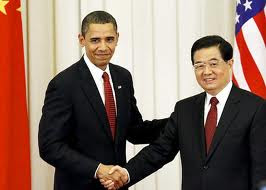


Reading "The Art of War" at this very moment (with the symbolic visit of Chinese President to the U.S.A.) produces at least uneasiness. I proceed to enumerate the reasons:

1.-One of the cornerstones of the book is the principle that we should avoid any confrontation with the intention of “winning without having to fight”. In this sense China is not confronted with anyone economically, only advances inexorably and "wraps".

2.-In "area of convergence" (belonging to various nations) it´s necessary to use alliances to overcome an adversary. In this blog I think I've mentioned, the example China and the construction financing for the bridge across the Danube in Belgrade. We realize a growing diplomatic activity seeking strategic points in the case of Serbia, as future European Union country with great potential for growth and consumption.

3.-The Master Sun Wu also mentions the concept of using the enemy. “Make the enemy work for you." Buying the debt of Spain or any other country, is ultimately what they're doing. Whenever another country works for you and make you earn money, doesn´t work for itself. Ultimately, the “Buying-bond nation” will progress upon the effort of the selling one. Now all markets are very happy about the relocation of the debt but, has anyone stopped to think what will happen when that loop-back and refinancing of state debt is over and nations want to receive the cash. The good news should be not to achieve the selling of the debt, should be the progressive amortization.

4.-Another of the basic ideas of the treatise is to maintain strict discipline. This mechanism should be so refined, so that the orders are transmitted from the head of the general (who is not the task of wielding the sword) to the last of its soldiers without any possibility of misunderstanding or disobedience. Everyone knows the iron yoke imposed by China to its population in terms of human rights, precisely because the deprivation of the fundamental rights and basic needs was a methodology for the imposition of discipline since the days of "Warring States".

5.-The axiom of military preparation in this case is the preparation of the working masses throughout China productive improvement. In this case, the Chinese educational programs should be making progress inside the limits of the "ideological manual."

6.-The war (in this case the economy as a way to defeat other nations without resorting traditional confrontation) is an exercise of knowledge. When you buy a fighter jet Shukoi-29, the ultimate goal is not to use it in military operations, but to have the knowledge to produce many others. This simile is extrapolated to the rest of the industrial activity in the pursuit of the “know-how. " for their own brands.

7.-In a desperate situation with no way out, the enemy is forced to fight with all his forces till death. It is preferable always to leave an escape for the enemy soldiers so they are not forced to kind of "kamizake" actions. On the other hand, you must lead your troops into a hopeless situation to fight to exhaustion.
When President Hu Jintao tells President Obama that China will buy 45,000 million in aircraft, apart from extending the influence of their national airlines, it seems that he is leaving an economic output spigot to the global rival.

8.-The use of spies as a knowledge of the enemy is another key element. Apart from knowing yourself, you must fully know your opponent.
There are many urban legends about what the Chinese immigrants in each country, its lack of transparency both economically and socially. Without getting into discussions of living coexistence, the question that comes to the point of this article is, how much do they know us and how we know them? How we know them in their own country? Honestly I think that they know us better than vice versa.

9.-A perfect action has power consumption. We must therefore avoid the consistent and attack the void: For China is very profitable economically to enter African weak countries, without regulations or restriction to stop its progression.

10.-The war is also the art of being "inscrutable." You have no shape so you can adapt to the enemy and the enemy cannot chase you. In this case is very important on “the art of deception”. We must continually try to confuse the enemy.
So what's behind, what the real intention behind all diplomatic activities? Clearly China is now the friend with money that everyone wants to have. It´s the entity that has made the leap to a higher economic and financial dimension but, haven´t we realized by now what this is all about?

The open discussion will be to express ones view about China conquering the World (I know that this parallelism with the book is frightening and I put it in a very hard and maybe not fair way, just to encourage the debate) or it is only just a gradual opening of China to the global coexistence.

A last idea to mention is that the period of the "Falls and Springs" (770-480 BC, the predecessor of the period of the "Warring States"), as I´ve mentioned, warriors were knights in a contest of values and virtues (which also involved the safeguarding of peace). Today, keeping the pseudo-economic comparison, there are large companies.
But China's leap into the next phase in which the company is the entire country, will also mean that whole nations will be forced to compete structural, legislative and economically in the same way, but not necessarily following the same criteria.